
URINARY TRACT INFECTIONS PREVALENCE AMONG CANCER PATIENTS UNDERGOING CHEMOTHERAPY AND RADIOTHERAPY AT THE NATIONAL ONCOLOGY CENTRE IN SANA'A, YEMEN
-
 Nuha Abdul Aziz Al-Yousfi
Department of Internal Medicine, Faculty of Medicine and Health Sciences, Sana’a University, Yemen.
Nuha Abdul Aziz Al-Yousfi
Department of Internal Medicine, Faculty of Medicine and Health Sciences, Sana’a University, Yemen.
-
Ibrahim Mohammed Amed Nahshal
University of Science and Technology, Sana’a city, Yemen
-
Sami Mohammed Abdo Hassan
Medical Microbiology and Clinical Immunology Department, Faculty of Medical Sciences, Al-Nasser University, Yemen.
-
Emad Hassan Al-Shamahi
Department of Ophthalmology, Faculty of Medicine and Health Sciences, Sana’a University, Yemen.
-
Khaled Abdul Karim Al-Moyed
University of Science and Technology, Sana’a city, Yemen.
-
Nawal Mohammed Al-Hababi
Department of Ophthalmology, Faculty of Medicine and Health Sciences, Sana’a University, Yemen.
-
Sami Sultan Ahmed Abdu
University of Science and Technology, Sana’a city, Yemen.
-
Hassan Abdulwahab Al-Shamahy
University of Science and Technology, Sana’a city, Yemen.
Keywords:
Antimicrobial resistance, cancer, E. coli, S. saprophyticus, uropathogensAbstract
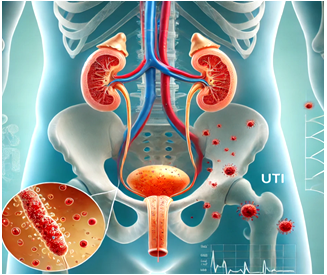
Background and aims: Among the most prevalent bacterial infections are UTIs, especially in cancer patients with compromised immune systems. The patients' vulnerability to infection and antibiotic resistance frequently worsen these infections, making empirical treatment challenging. In order to improve the empirical treatment of UTIs with antibiotics, the study is carried out to determine the antibiotic resistance pattern of UTI bacteria among cancer patients at the National Oncology Centre.
Methods: An ongoing prospective follow-up research was conducted at the National Oncology Centre in the city of Sana'a, Yemen, from October to December 2025, involving 290 cancer patients (157 females and 133 males) aged 2 to 76, with a mean age of 32.7 years. Data on clinical, demographic, and factors influencing urinary tract infections (UTIs) were collected, followed by midstream urine samples to culture potential UTI pathogens on blood and MacConkey agar.
Results: The largest group of cancer patients is aged 26-35 years (24.1%), with a majority female representation (54.1%). Breast cancer is the most prevalent, constituting 26.9% of cases, followed by Hodgkin's lymphoma and other types at 10.7% each, with leukemia and head and neck cancer at 10%. Pathogenic strains like Escherichia coli and S. saprophyticus were the dominant causes of UTI. Antibiotic susceptibility, revealing E. coli shows 100% resistance to cefixime, while imipenem and meropenem maintain high sensitivity at 68.4%. S. saprophyticus has high sensitivity to vancomycin (95.7%) and linezolid but significant resistance to cefixime (78.3%) and augmentin (56.5%).
Conclusions: The results highlight two primary health concerns: a high prevalence of cancer among young adults (particularly females with breast cancer) and a widespread crisis of beta-lactam antibiotic resistance in UTI-causing bacteria. Overall, significant resistance to beta-lactam antibiotics was noted among isolates.
Peer Review History:
Received 3 April 2026; Reviewed 9 May 2026; Accepted 6 June; Available online 15 July 2026
Academic Editor: Dr. Emmanuel O. Olorunsola , Department of Pharmaceutics & Pharmaceutical Technology, University of Uyo, Nigeria, [email protected]
Reviewers:
Dr. Bilge Ahsen KARA, Ankara Gazi Mustafa Kemal Hospital, Turkey, [email protected]
Prof. Gorkem Dulger, Duzce University, Turkey, [email protected]
Downloads


Published
How to Cite
Issue
Section
Copyright (c) 2026 Universal Journal of Pharmaceutical Research

This work is licensed under a Creative Commons Attribution-NonCommercial 4.0 International License.






 .
.