
RETROSPECTIVE ANALYSIS OF 24 SURGICALLY TREATED ZYGOMATICOMAXILLARY COMPLEX FRACTURES USING TWO POINTS VERSUS THREE POINTS TECHNIQUES
-
 Lutf Mohammed Al-Rahbi
Yemen Medical Specialist Council, Ministry of Health and population, Yemen. Department of Oral and Maxillo-Facial Surgery, Faculty of Dentistry, Sana’a University, Republic of Yemen.
Lutf Mohammed Al-Rahbi
Yemen Medical Specialist Council, Ministry of Health and population, Yemen. Department of Oral and Maxillo-Facial Surgery, Faculty of Dentistry, Sana’a University, Republic of Yemen.
-
Ayman Ahmad Amer
Yemen Medical Specialist Council, Ministry of Health and population, Yemen.
-
Hassan Abdulwahab Al-Shamahy
Department of Basic Sciences, Faculty of Dentistry, Sana’a University, Republic of Yemen. Medical Microbiology and Clinical Immunology Department, Faculty of Medicine and Health Sciences, Sana’a University, Republic of Yemen.
-
Ahmed Abdulah Al-Ashwal
Yemen Medical Specialist Council, Ministry of Health and population, Yemen. Department of Oral and Maxillo-Facial Surgery, Faculty of Dentistry, Sana’a University, Republic of Yemen.
Keywords:
Aetiology, complications, maxillofacial fracture, three-point technique, two-points techniques, zygomaticomaxillary complex fractureAbstract
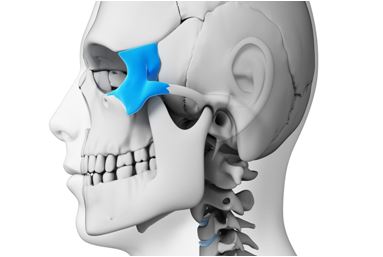
Background and aims: Mandibular fractures are the most common facial trauma injuries, followed by zygomaticomaxillary complex (ZMC) fractures. The aetiology of these fractures varies greatly between nations and even regions, despite the fact that their occurrence is uniform across geographic boundaries. This study compares the results of two-point versus three-point surgical treatments for ZMC fractures.
Patients and methods: Patients with zygomatico-maxillary complex fractures who received surgical treatment at the Military Hospital in Sana'a, Yemen, in 2025 were the subject of a retrospective analysis. Regarding the two-point and three-point procedures, the patients were split into two groups. Demographic information, aetiology, fracture types location, any facial injuries, kind and timing of repair, were all gathered.
Results: The study involved 24 male patients with zygomatico-maxillary complex fractures, averaging 26.3 years in age, primarily due to road traffic accidents (70.8%). High Intraorbital Rim (IOR) involvement was observed in 95.8% of cases, with complications such as ocular muscle entrapment (33.3%) and inferior orbital nerve (ION) involvement (75%). Periorbital edema (79.2%) and ION paraesthesia (75%) were the most common complications. The three-point fixation technique showed a higher incidence of periorbital edema (100%) and numbness in the inferior oblique nerve (100% versus 50% for the two-point technique), alongside more lower eyelid deformities (83.3% vs 25%),
Conclusions: Road traffic accidents is most common aetiology of zygomatico-maxillary complex fractures, High intraorbital rim (IOR), ocular muscle entrapment , inferior orbital nerve (ION) involvement, Periorbital edema and ION paresthesia were the most common complications.
Peer Review History:
Received 4 December 2025; Reviewed 17 January 2026; Accepted 19 February; Available online 15 March 2026
Academic Editor: Prof. Dr. Gorkem Dulger , Duzce University, Turkey, [email protected]
Reviewers:
Dr. Kingsley C Anukam, University of Benin, Nigeria, [email protected]
Dr. Leyla Açık, Gazi University, Ankara, Turkey, [email protected]
Downloads


Published
How to Cite
Issue
Section
Copyright (c) 2026 Universal Journal of Pharmaceutical Research

This work is licensed under a Creative Commons Attribution-NonCommercial 4.0 International License.






 .
.